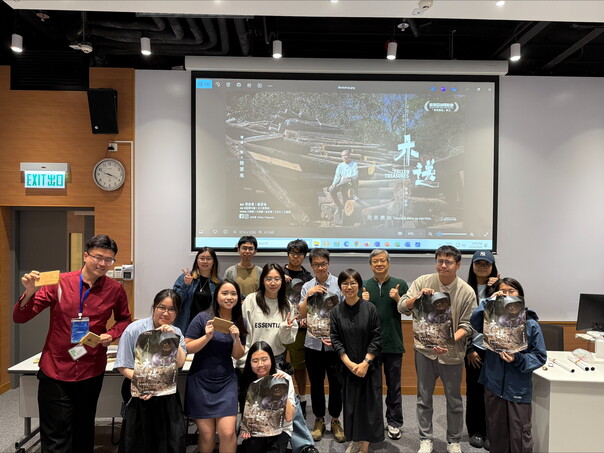
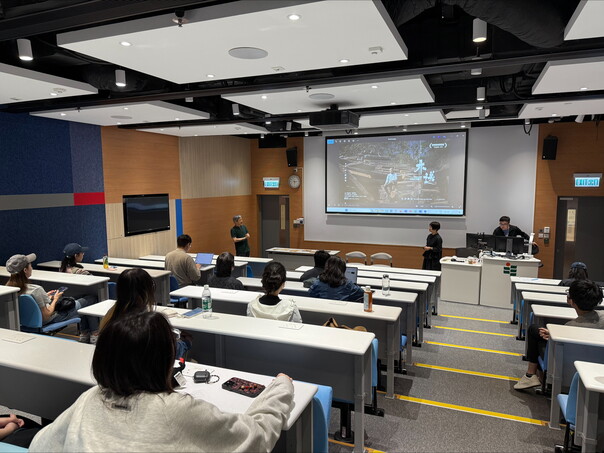
CKC TechCulture Innovation Centre held a screening and post-screening talk of the documentary Fallen Treasures on 27 April 2026 at the Tai Po Campus. The event concluded successfully with an engaged and lively atmosphere throughout.
Filmed between 2018 and 2023, Fallen Treasures documents the story of 志記, widely regarded as “Hong Kong’s last sawmill,” as it navigates land resumption amid ongoing urban development. The film traces its role in witnessing Hong Kong’s post-war recovery and economic growth, as well as its transformation into a key player in the environmental sector.
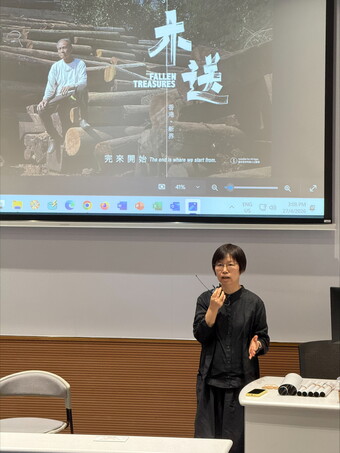
The 81-minute documentary was screened during the event, followed by a sharing session by the director, Elyse Hon, who introduced the creative concept and production process, and engaged in dialogue with the audience. Participants actively raised questions and shared reflections, fostering dynamic discussions and deepening understanding of the film’s themes.
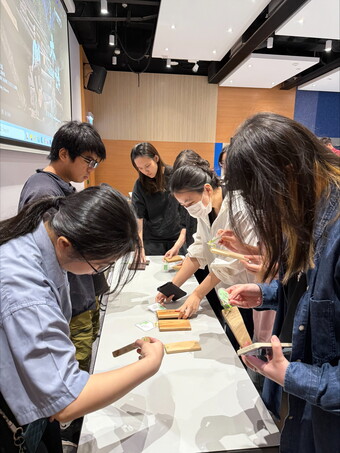
The event also featured a “Wood Appreciation” experiential session, where participants closely examined six types of wood, including camphor, teak, maple, white oak, cypress, and sandalwood. These materials originate from different regions around the world, such as North America, Central America, East Africa, and local sources, and include some rare species now protected from trade. Their preservation is made possible by 志記’s long history as a sawmill. Through observing, smelling, touching, and gently tapping the wood to compare sounds, participants engaged multiple senses to appreciate the textures and qualities of different timber, gaining a deeper understanding of the close relationship between wood culture and the natural environment.
The event not only enhanced participants’ understanding of urban development, rural industry, and sustainability, but also, through visual and sensory experiences, encouraged reflection on the relationship between humans and nature, as well as between industry and the environment. It further highlighted the importance of cultural conservation and the transmission of local memory, opening up deeper public dialogue on these issues and inspiring diverse perspectives on future development.
-Ends-